 Chris Cho
The best free tools to learn anything online right now are Brainmunk, Google NotebookLM, Khan Academy, Coursera (free audit), and Perplexity. Each one plays a different role in your learning process, and together they cover the full journey from starting a topic to going deep on it.
Most people either spend too long trying to figure out where to begin, or they jump into a course that assumes knowledge they don’t have yet. These tools fix that problem at every stage.
All five options listed here are free to use. Some have paid upgrades, but the core learning features cost nothing.
We offer this website completely free to our visitors. To help pay the bills, we’ll often (but not always) set up affiliate relationships with the top providers after selecting our favorites. However, we do our best not to let this impact our choices. There are plenty of high-paying companies we’ve turned down because we didn’t like their product.
An added benefit of our relationships is that we always try to negotiate exclusive discounts for our visitors.
Quick Comparison
1. Brainmunk – AI-Generated Courses on Any Topic
Best for: Anyone who wants a structured starting point on any subject in under a minute

Brainmunk is the best place to start learning anything online. You type in a topic, and it builds a research-backed course for you in about 60 seconds. No hunting through YouTube playlists or skimming blog posts to figure out where to begin.
The courses are structured like a real curriculum. You get an organized breakdown of what to learn and in what order, so you actually understand the topic before trying to go deeper.
What makes Brainmunk stand out is what you can do after that first course. Once you have the foundation, you can create spin-off courses on specific subtopics you want to explore further. It’s a way to self-direct your learning path without starting from scratch every time.
It’s free to get started, and any topic is fair game. Whether you’re learning about compound interest, digital marketing, or portrait photography, Brainmunk handles the research and structure so you can focus on actually learning.
Get Started with Brainmunk for Free
Pros
- Generates a structured course on any topic in about 60 seconds
- Research-backed content, not just a list of links
- Build spin-off courses to go deeper on specific subtopics
- Free to start with no credit card required
- Works for literally any topic you can think of
Cons
- Courses are AI-generated, so always verify key facts independently
- Not a replacement for hands-on practice or live instruction
2. Google NotebookLM – Your AI Research Organizer
Best for: Going deeper on a topic using your own sources and notes
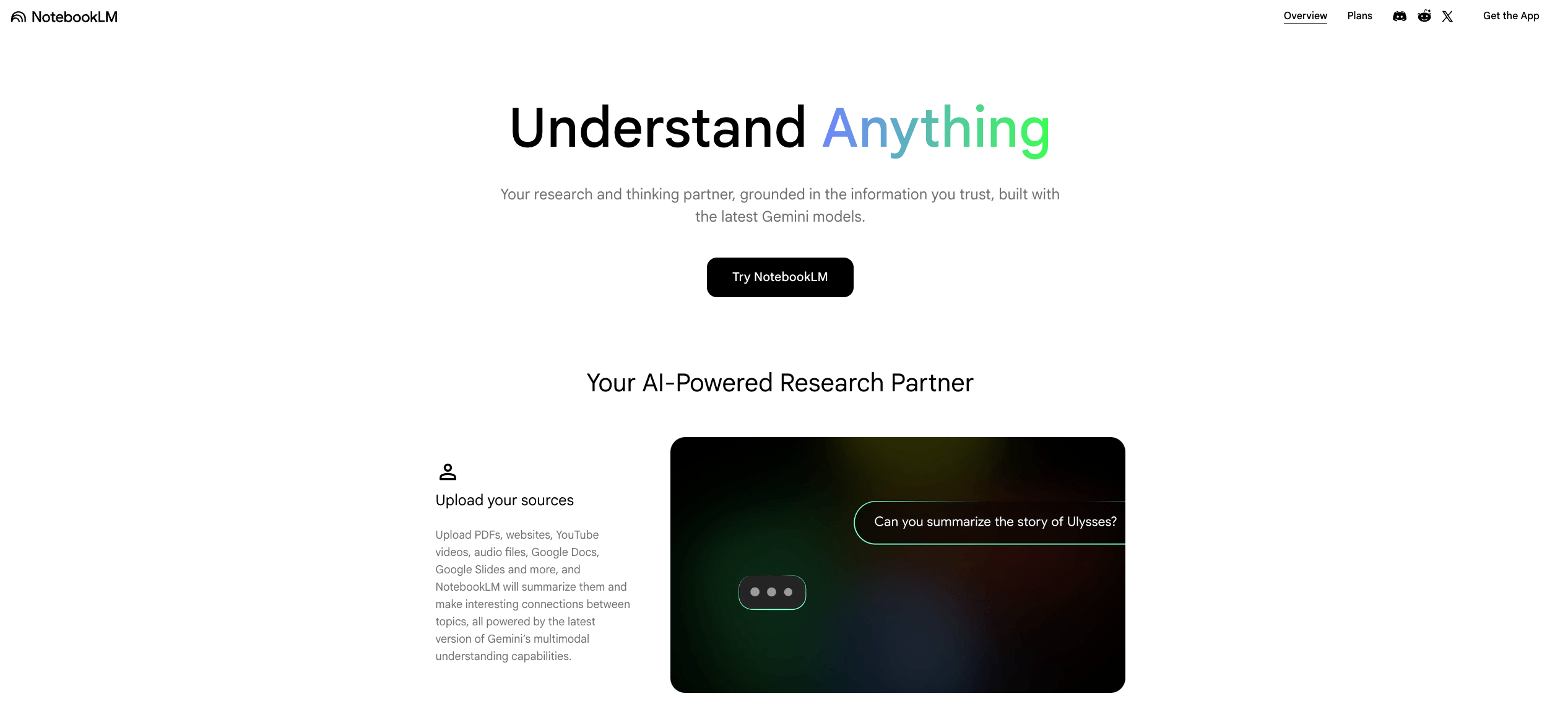
Once you have a foundation from Brainmunk, NotebookLM is where you go to dig deeper. It’s a free tool from Google that lets you upload your own documents, PDFs, research papers, and notes, then ask questions and get cited answers from those specific sources.
You can upload anything related to a topic you’re learning and turn it into an interactive knowledge base. Ask it to summarize a chapter, explain a concept differently, or find connections between two ideas across different documents.
NotebookLM also generates study guides, briefing documents, and even audio overviews from your uploaded material. It’s particularly useful when you’ve moved past the basics and want to work through more specific or technical content at your own pace.
The core version is completely free. No subscription required to get real value out of it.
Try Google NotebookLM for Free
Pros
- Completely free with a Google account
- Upload your own sources and get cited, grounded answers
- Generates study guides, timelines, and audio overviews automatically
- Great for synthesizing information across multiple documents
- No hallucinations about content outside your uploaded sources
Cons
- Only as good as the sources you upload to it
- Not ideal for finding new content on its own
- Free tier has source and storage limits
3. Khan Academy – Free Structured Learning for Academic Subjects
Best for: Building a strong foundation in math, science, economics, and more
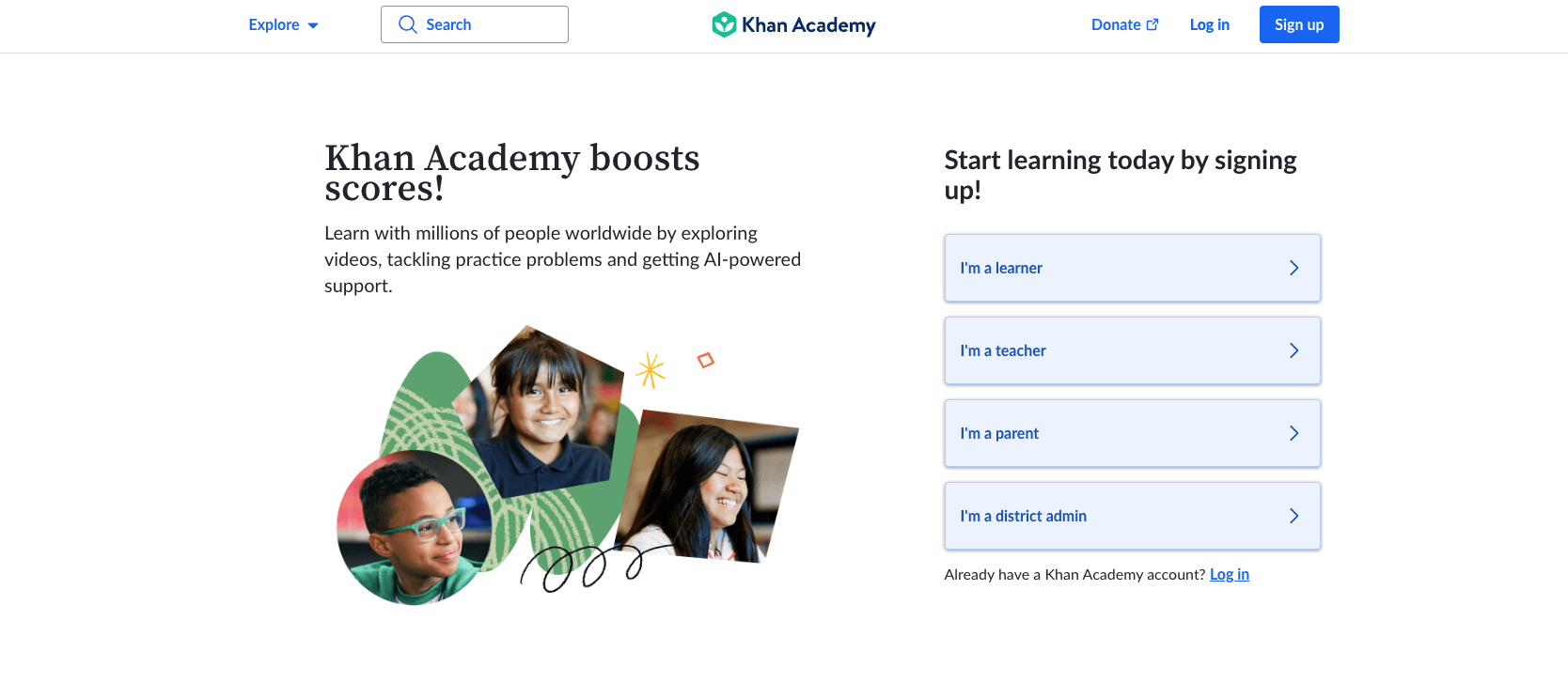
Khan Academy is 100% free with no paid tier and no hidden costs. Everything on the platform is accessible to everyone, always. It covers math, science, economics, computing, history, and test prep from beginner through early university level.
What sets Khan Academy apart from a YouTube search is structure. The content is organized into sequences, so you build knowledge in the right order. Practice questions are built in, so you’re not just watching videos and hoping things stick.
It’s best used for subjects where foundational knowledge really matters. If you’re learning a professional skill through Brainmunk or Coursera and realize you’re missing background in statistics, economics, or math, Khan Academy is the place to fill that gap for free.
Start Learning on Khan Academy for Free
Pros
- Completely free, no paid tier at all
- Structured sequences with built-in practice questions
- Covers subjects from beginner through early college level
- Great for filling knowledge gaps in foundational subjects
- Available on web, iOS, and Android
Cons
- Weaker for advanced or professional topics beyond academic subjects
- No certificates or credentials for employers
- Less useful for niche or emerging subjects
4. Coursera Free Audit – University-Level Courses at No Cost
Best for: Structured deep dives into professional and academic subjects from top universities
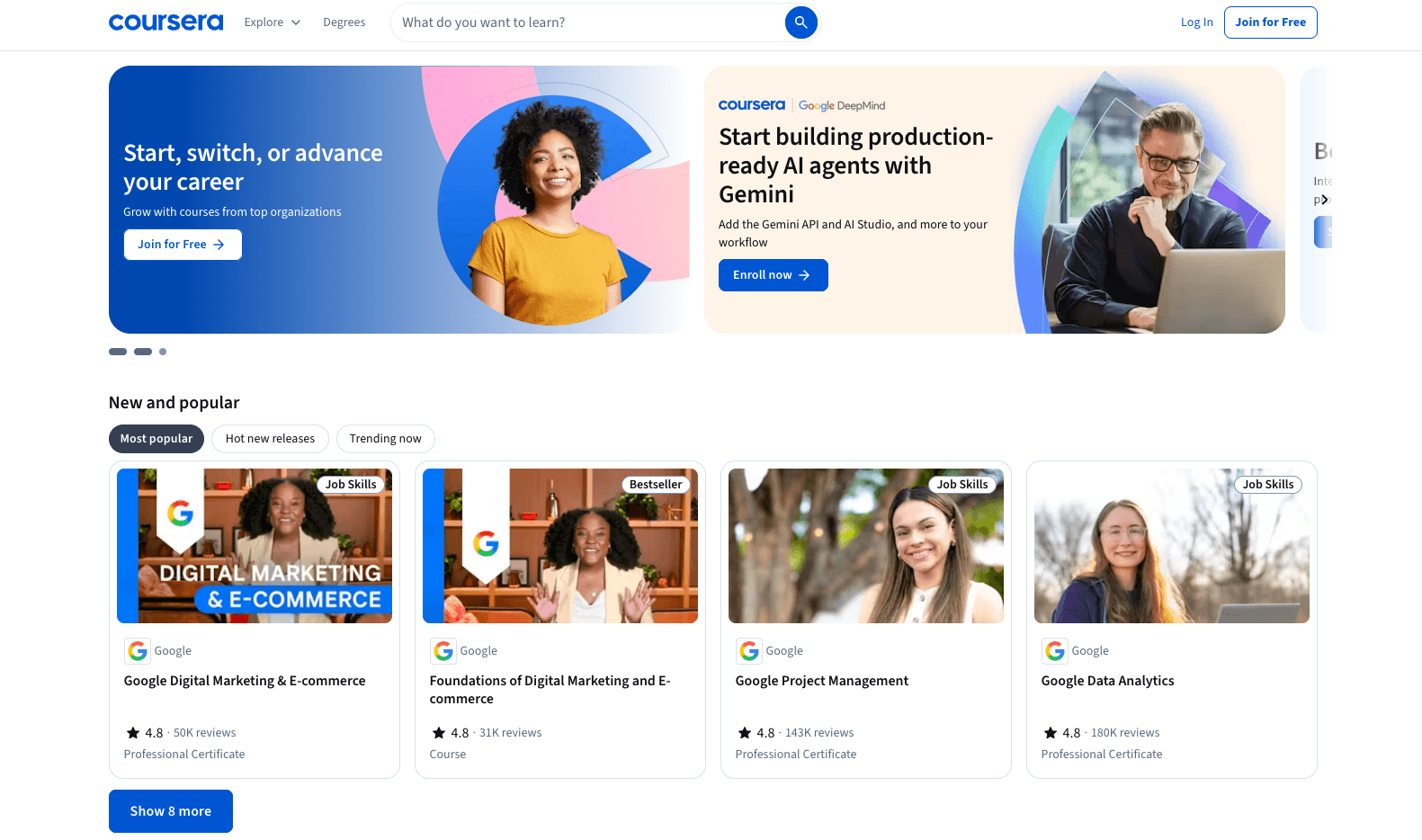
Coursera partners with universities like Stanford, MIT, and Yale to offer online courses. Most of those courses can be audited for free, which means you get access to all the video lectures and readings without paying for the certificate or graded assignments.
Auditing is the hidden feature most people don’t know about. When you enroll in a course, look for the “audit” option at checkout. It’s available on the majority of individual courses and gives you full access to the learning content.
Coursera is the right tool when you’ve built a foundation on a topic and want to go through a real university-designed curriculum. It covers business, data science, technology, social sciences, and more, with content that goes deeper than anything you’ll find in a quick AI-generated overview.
Browse Free Courses on Coursera
Pros
- Courses from Stanford, MIT, Yale, Google, IBM, and more
- Most courses can be audited completely free
- University-equivalent depth on professional and academic topics
- Structured curriculum with video lectures and readings
- Covers areas where Khan Academy is thin (business, law, data science)
Cons
- Certificates and graded assignments require payment
- Audit access varies by course and may not always be available
- Courses are long, sometimes spanning several weeks
5. Perplexity – Cited AI Search While You Learn
Best for: Getting quick, sourced answers to research questions as you study
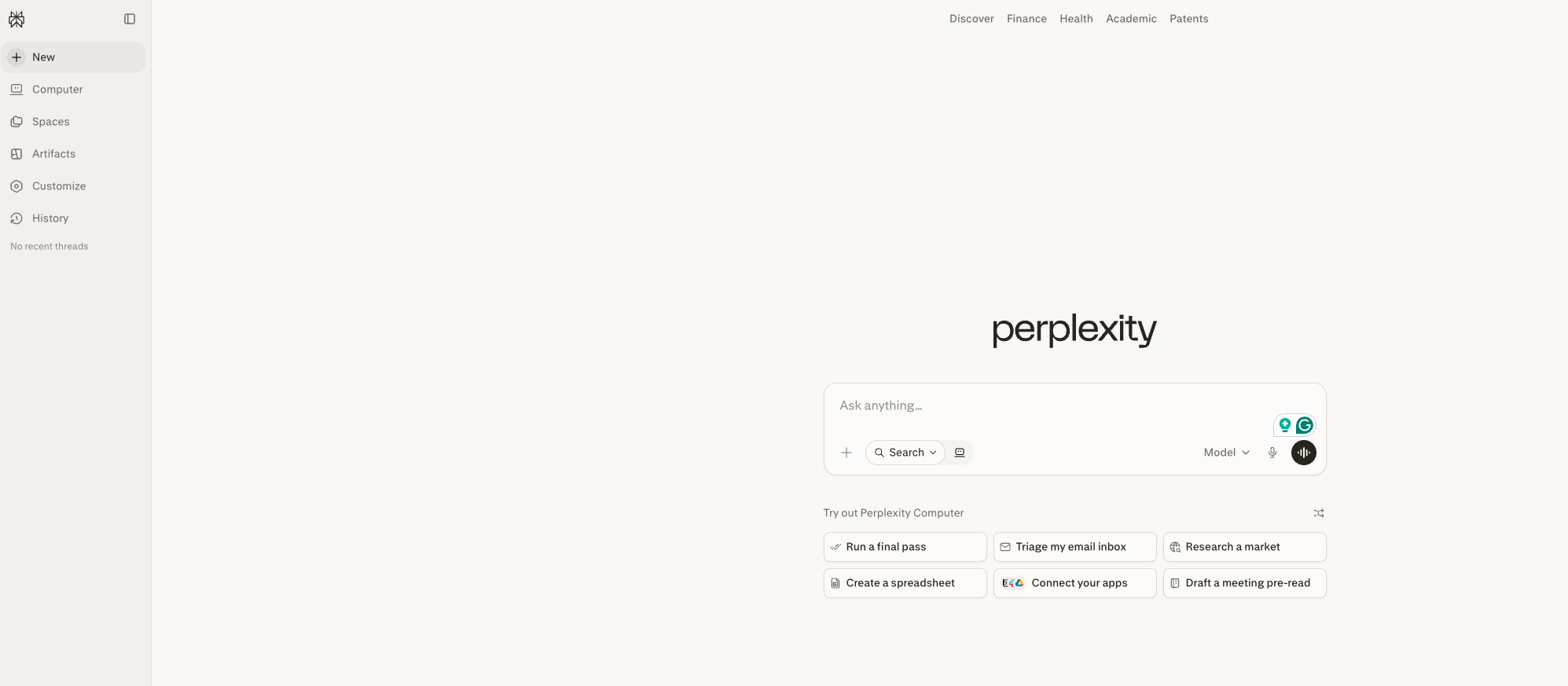
Perplexity is an AI search engine that gives you synthesized answers with citations. Instead of getting a list of links, you get a direct answer pulled from real sources, with references you can verify.
It’s most useful as a companion to your learning, not a standalone course tool. When something in a Brainmunk course or a Coursera lecture isn’t clicking, you can ask Perplexity to explain it differently, find examples, or point you to related sources.
The free tier is solid. You get access to web search and cited answers without needing to pay anything. It’s especially useful for fast-moving topics where you need current information, since it searches the live web rather than relying on a training cutoff.
Pros
- Free to use with no account required to start
- Gives cited, sourced answers you can verify
- Searches the live web, so answers are current
- Great for quick concept clarification while studying
- Works alongside any other learning tool in this list
Cons
- Not a structured learning tool on its own
- Free tier limits on deeper AI search features
- Always verify citations before treating answers as definitive
Which Tool Should You Start With?
Start with Brainmunk. Type in the topic you want to learn and let it build your first course. You’ll have a structured overview in about a minute, which gives you a clear picture of what the subject actually covers before you invest more time in it.
From there, use Perplexity to look up anything that doesn’t make sense as you work through the material. It’s faster than a Google search and gives you sourced answers instead of a list of pages to sort through.
Once you have the basics, Khan Academy is the right move if your topic has academic foundations that need shoring up, like math, statistics, or economics. It’s completely free and structured in a way that actually builds knowledge rather than just exposing you to it.
When you’re ready to go deeper, check Coursera for a free audit of a university-level course on your subject. The content goes further than any quick overview can, and auditing costs nothing.
Use NotebookLM throughout the process. Upload your notes, course materials, and any articles you find, and use it as a research base you can query. It’s particularly useful once you’re in the “expand and explore” phase and want to connect ideas across multiple sources.
Topic-Specific Free Courses
- Learn QuickBooks
- Learn Zapier
- Learn Canva
- Learn HubSpot
- Learn SEO Fundamentals
- Learn Graphic Design Basics
- Learn Excel Basics
- Learn Video Editing Fundamentals
Frequently Asked Questions
Can you really learn anything online for free?
Yes. Between tools like Brainmunk, Khan Academy, and Coursera free audits, the content available at no cost covers an enormous range of subjects. The main things you typically pay for are certificates, live instruction, and personalized feedback, not access to the learning content itself.
What is the best free tool for learning a completely new topic?
Brainmunk is the best starting point for learning anything new. It generates a structured course on any topic in about 60 seconds, so you get a clear overview of what to learn and in what order before investing more time. From there, you can expand into deeper tools like Coursera or NotebookLM.
Is Google NotebookLM actually free?
Yes. The core version of NotebookLM is completely free and requires only a Google account. There is a paid Plus tier with higher limits and extra features, but the free version gives you access to all the main functionality including source uploads, AI summaries, and audio overviews.
Do you need to pay for a Coursera certificate to learn?
No. Most Coursera courses can be audited for free, which gives you full access to the video lectures and course readings. You only pay if you want the graded assignments or an official certificate. The audit option is usually available at the enrollment screen.
How is Perplexity different from just using Google?
Perplexity synthesizes an answer from multiple sources and shows you the citations directly, so you can verify where the information came from. A Google search gives you links to read through yourself. For learning purposes, Perplexity is faster when you need a specific concept explained or clarified.